 Free account
Free account Workbench plan
Router Table Plans
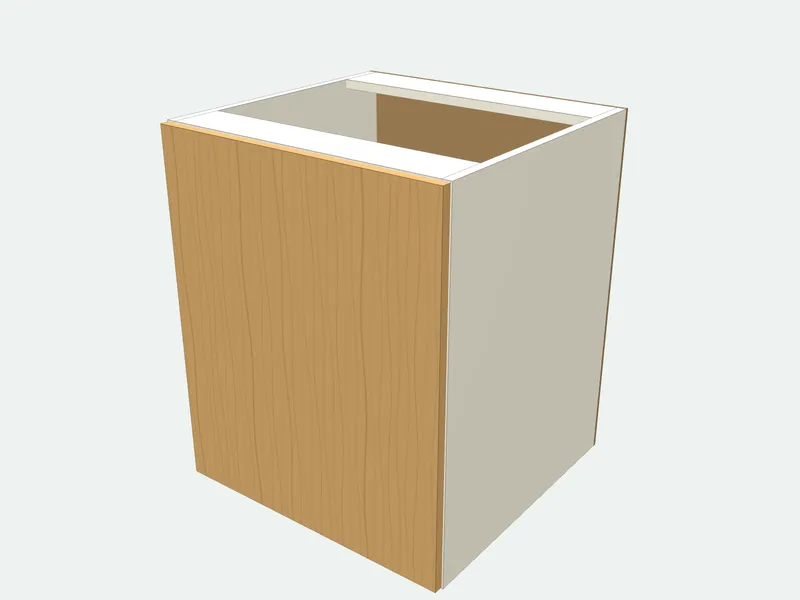
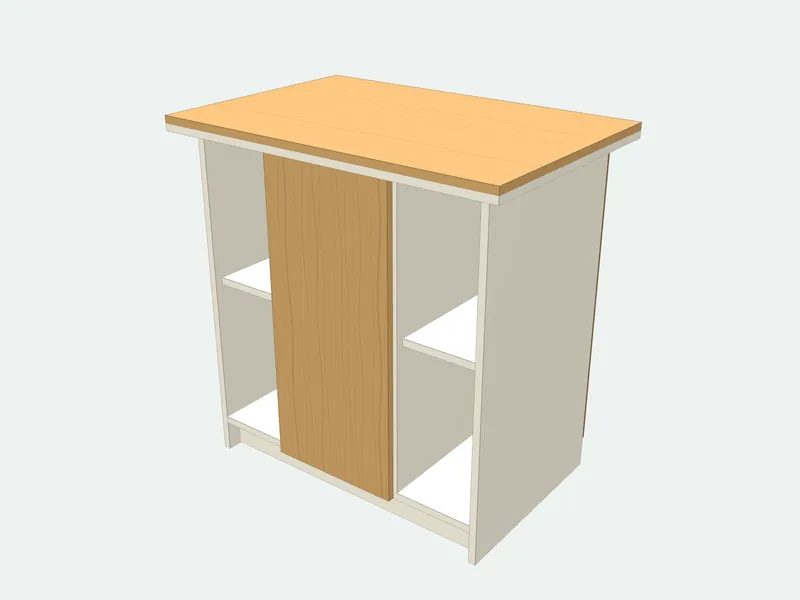
A router table built as a cabinet: the top is two layers of plywood or MDF glued together, flat and heavy, overhanging the cabinet by 50 mm all round so you can clamp a fence and featherboards to every edge. The router hangs in a closed middle bay with a door, ready for a dust port in the back; the two side bays hold bits, wrenches and the fence. Enter the top size and the height to get the cut list. Every part is a rectangle, so it is a weekend project for a circular saw or a table saw.
- Default size
- 900 × 900 × 600 mm
- Parts
- 13 pieces · 9 sizes
- Sheets (2440 × 1220 mm (4 × 8 ft))
- 2 carcass + 1 door + 1 back
- Difficulty
- Intermediate
- Build time
- About 8 hours
- Edge band
- 13.2 m
Cut list (default size)
| Part | Qty | Length | Width | Thick. | Board | Edges |
|---|---|---|---|---|---|---|
| Top | 1 | 900 | 600 | 18 | Door board 18 mm (wood look) | |
| Top under-layer | 1 | 900 | 600 | 18 | Carcass board 18 mm | |
| Side | 2 | 864 | 500 | 18 | Carcass board 18 mm |
Sizes in millimetres; length runs along the grain. Edges: bold lines are banded.
6 more parts, the sheet layout and the cut order are in the full plan.Resize it to any size, print labels and save it in a project.Sign in free to open it
How it is built
- Glue the two top layers together on a flat floor or bench, weighted all over, and let the glue cure before you cut the plate opening.
- Rout the recess for your insert plate with a template, centred over the router bay and about a third of the depth in from the front.
- Cut a 100 mm (4 in) dust port in the back of the router bay and leave a 10 mm gap under its door for air.
- Put locking casters under the plinth if you move the table; take their height off the table height.
Common mistakes
- Cutting the plate opening before the top is glued and flat: the plate rocks.
- Closing the router bay airtight: the router overheats and the dust port cannot pull air.
Tools you need
- Table saw or track saw
- Router with a flush-trim bit
- Drill/driver
- Clamps
Frequently asked questions
How tall should a router table be?
Most router tables are 34–38 in (865–965 mm) high, a little higher than a workbench, so you can see the bit and keep your hands low. The default is 900 mm (35 1/2 in); raise it if you are tall.
How big should a router table top be?
24 × 32 in (610 × 810 mm) is a common size, enough for most work. The default top is 900 × 600 mm (35 × 24 in); a wider top supports long boards better.
What is the best material for a router table top?
Two layers of 3/4 in plywood or MDF glued together give a flat, heavy top that does not sag. MDF faced with plastic laminate is smooth and slippery; seal plain MDF so it does not swell.
Should the router bay be closed?
Yes: a closed bay with a 100 mm (4 in) dust port in its back panel catches most of the chips and keeps the noise down. Leave a gap at the bottom of the door so air can flow in.
Related guides
How to Build a WorkbenchHow to build a workbench for the garage or shop: the right height and size, a 2x4 frame or a plywood cabinet base, a double top, and no racking.How to Use a RouterHow to use a wood router: choosing bits, setting the depth, which way to feed, routing edges, dadoes and grooves with a guide, and using a router table safely.Workbench HeightThe perfect workbench height is about the height of your wrist when you stand: 34–38 in (86–97 cm) for most people. See a chart by your height and type of work.